
The Semiconductor Industry News
"The IT industry is inexorably approaching maturity. Sure, the recent surge in orders for semiconductor production equipment may lead people to imagine that the go-go times are about to return. But unless the electronic device industry finds new growth vectors, the future won't be bright," said Akira Minamikawa, one of Japan's most respected semiconductor industry analysts.
[... more]
[... more]
[... more]
"The worldwide PV installation boom has subsided, with one big exception—Japan. More than 2,000 megasolar installations are planned in this country," the bullish editor-in-chief of an industry magazine said to me the other day. He contended, "Japan is at the epicenter of what promises be a new boom in PV installations."
[... more]
[... more]
[... more]
The hydrogen energy era is on the way. Toyota has announced it may commercialize hydrogen-powered fuel cell vehicles (FCVs) next year and has set itself the target of cutting the cost per vehicle to 5 million yen (US$50,000*)—one-twentieth of the current cost. Likewise, Honda plans to introduce FCVs next year. Nissan is targeting introduction in 2017, slightly behind its competitors.
[... more]
[... more]
Japanese chipmakers have been manufacturing some products for more than two decades. This prompted an executive of Massachusetts-based aftermarket manufacturer Rochester Electronics to comment that the Japanese semiconductor industry seems to have no policies on discontinuing production of obsolete devices. Though his comment contains more than a grain of truth, Japan's chipmakers are reviewing their business practices and have started winnowing their product portfolios.
[... more]
"What happened? I've never seen such a rush of orders. As semiconductor investment has been in low gear, we can't replenish production facilities and manpower immediately. We are naturally delighted about the tremendous amount of orders, but the deadlines keep us awake at night," said a gleeful executive of a Japanese manufacturer of wafer fab equipment.
[... more]
Electronic components have grown in importance to the point that they are the face of Japan's electronics industry. With input from Yuzuru Sato, an analyst with Tokyo-based DG Research, who tracks the industry, we identify what is hot and how this fiscal year is shaping up.
[... more]
Toyota Motor Corp. has made clear it intends to use SiC power devices, currently under development in house, in mass-produced cars by around 2020. The company plans to begin test runs of cars equipped with the devices on public roads within a year.
[... more]
I relished a recent opportunity to listen to G. Dan Hutcheson, CEO and chairman of VLSI Research Inc., share his insights, especially as I hadn't heard his take on the semiconductor industry for quite a while. Not only is Dan Hutcheson an acknowledged authority on the industry, he is also one of its most distinctive voices. In particular, his analyses of production equipment and process technologies tend to outshine the observations of other commentators.
[... more]
[... more]
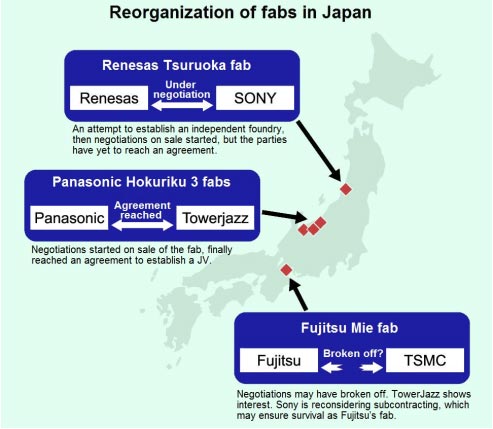
On April 8, Sony Corp. opened Yamagata Technology Center, formerly Renesas' 300mm Tsuruoka fab, and disclosed a plan to establish monthly production capacity of 20,000 300mm wafers for CMOS sensors by March 2016. The project will involve investing about 28 billion yen (US$280 million*) to refurbish existing equipment and install new equipment.
[... more]
[... more]
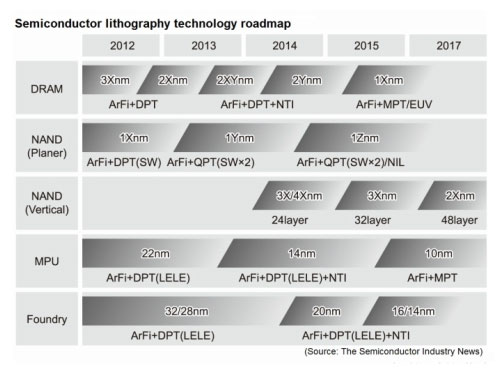
[... more]
I was born and bred in Yokohama, where my family has been running a busy restaurant specializing in delicious soba noodles, a Japanese favorite, for more than 130 years. Looking back to my childhood, I have vivid memories of workers from factories across the Keihin Industrial Zone* dropping into our shop to eat, drink, talk about everything under the sun and generally have a good time.
[... more]
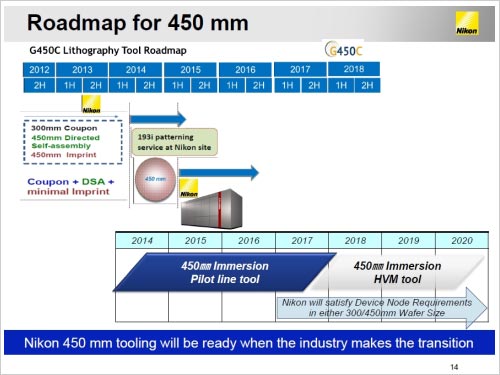
Semiconductor production equipment manufacturers' expectations of the post-sales business, including refurbishing used equipment and after-sales services, are on the rise as they endeavor to turn it into a major revenue stream. This is certainly true of Canon, whose imminent acquisition of Austin, Texas-based Molecular Imprints Inc., a nanoimprint system manufacturer, indicates its aggressive plans concerning leading-edge lithography systems.
[... more]
Mitsubishi Electric Corp. launched its new Power Device Innovation Center earlier this month to concentrate development, design and sales of power devices at its Power Device Works in Kitakyushu, Fukuoka prefecture. Thus, sales, design and development operations for power devices are now integrated under one roof alongside the company's manufacturing plant for these products. The center represents investment totaling 2.5 billion yen (US$25 million).
[... more]
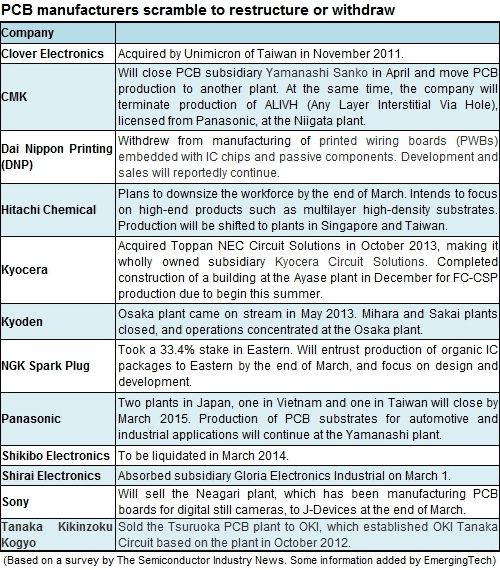
[... more]
"I hear that Mitsubishi Heavy Industries is building a national regional jet and Honda* is building a small business jet with their own technologies. But I am wondering why Japanese manufacturers can't make top-of-the-line fighters and big airliners, which will bring bigger business."
[... more]
Semiconductor production equipment manufacturers' expectations of the post-sales business, including refurbishing used equipment and after-services, are on the rise as they endeavor to develop it into a major revenue stream. This is certainly true of Tokyo Electron, which is setting up a dedicated organization to aggressively promote its post-sales business.
[... more]
To promote commercialization and take-up of solid hydrogen-source fuel cells, the Kyoto Fuel Cell Alliance* was launched by Rohm, Kyoto University, Aquafairy and others in January. The alliance's mission is to promote commercialization of the fuel cell system, develop applications, establish an international standard for the system, and secure intellectual property. The alliance includes organizations from industry, academia and government. The kickoff meeting was held on January 9 in Kyoto.
[... more]
Capital investment by the global semiconductor industry is estimated at 5 trillion yen (US$50 billion*) for 2013, roughly the same as for the previous year. As you may know, the value of the global semiconductor market edged up to 30 trillion yen from the previous year, as if to rub in the fact that the days when the market grew by leaps and bounds are long gone.
[... more]
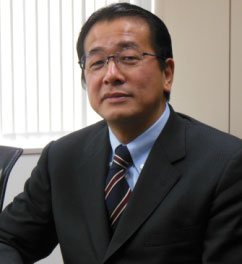
[... more]
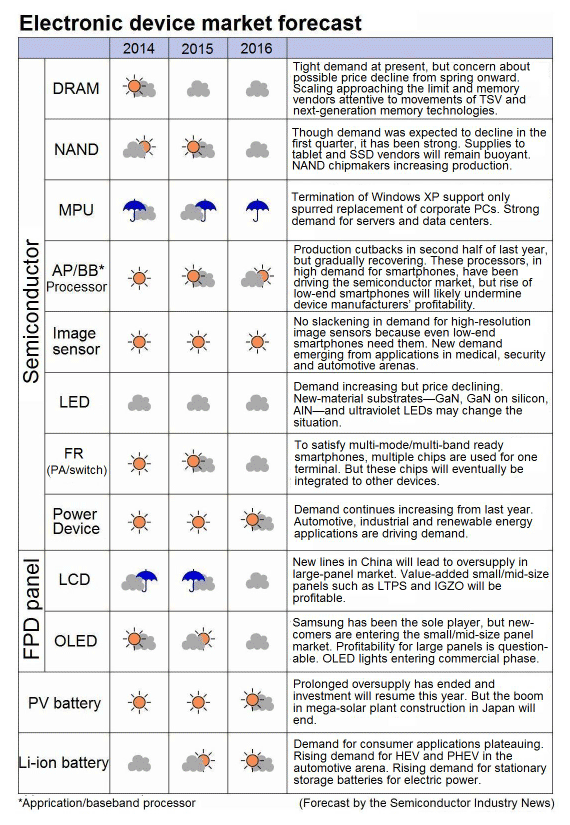
[... more]
[... more]
Sumitomo Electric Industries, Ltd. is boosting its GaN wafer business to compensate for slack demand for GaAs wafers, the principal products of its compound semiconductor wafer business that appears to have hit a wall recently.
[... more]
Panasonic Corp. is in a flurry of activity as it explores various ways of restructuring its semiconductor business. Media reported that Panasonic would spin out three fabs into a separate company in which TowerJazz of Israel had essentially agreed to take a 50% equity stake, but the situation remains in flux.
[... more]
[... more]
The crossover of the ICT/semiconductor field and the medical equipment sector has emerged as a prominent theme. The medical equipment industry is on a steady, long-term, growth trajectory, whereas the electronic device industry, a plaything of fluctuating demand, is a veritable roller coaster in comparison. The dependable, expanding world of medical equipment is an inviting prospect for companies in the electronics industry.
[... more]
[... more]
Panasonic Corp. and Tesla Motors have reached an agreement whereby Panasonic will increase its supply of automotive-grade lithium-ion battery cells to Tesla. Under this agreement updating and expanding the companies' 2011 arrangement, Panasonic is to supply almost 2 billion cells over the four years from 2014 to 2017.
[... more]
[... more]
Although Japan's semiconductor industry is no longer No. 1 in the global market, it still retains the second position with a respectable 16% share. But the US is way out in front while Korea and Taiwan are snapping at Japan's heels.
[... more]
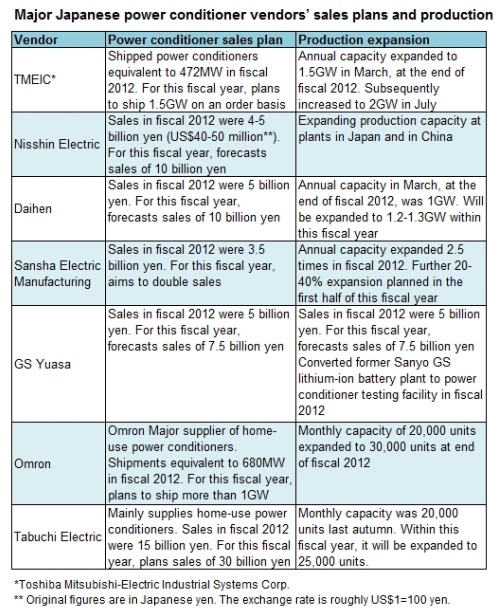
[... more]
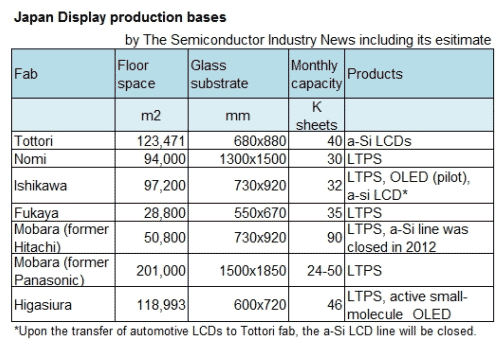
[... more]
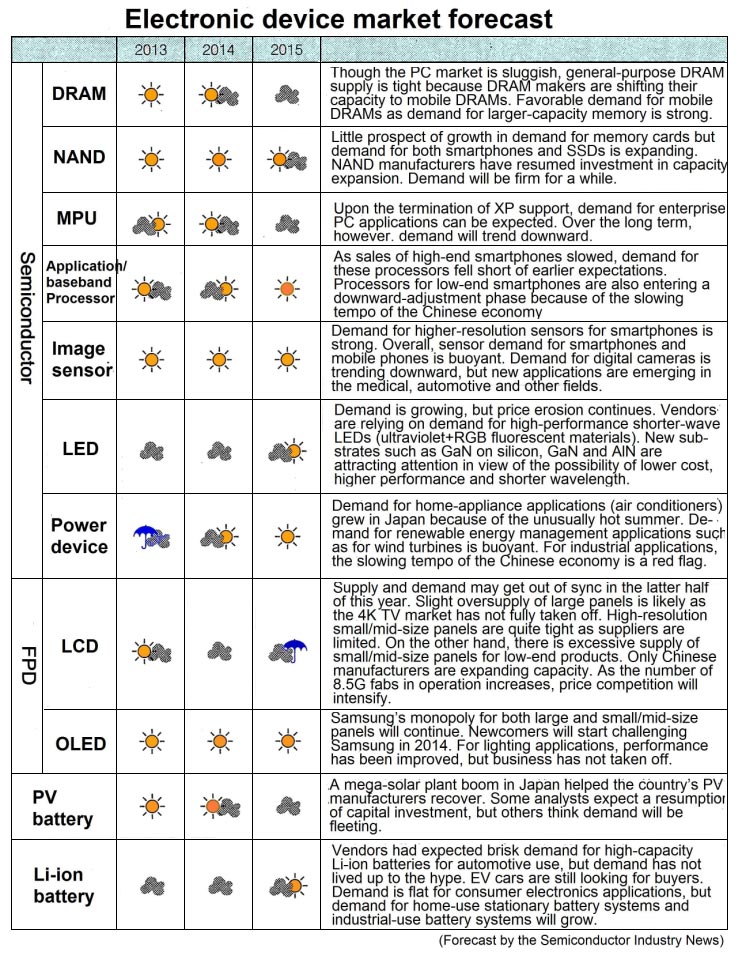
[... more]
"Tokyo Electron was once the world's leading supplier of semiconductor production equipment. How could such a company fall into the hands of its biggest American rival! It's a national disgrace! Tokyo Electron should have toughed it out alone as a champion of Japanese industry," exclaimed an exasperated retired executive of a major Japanese chipmaker.
[... more]
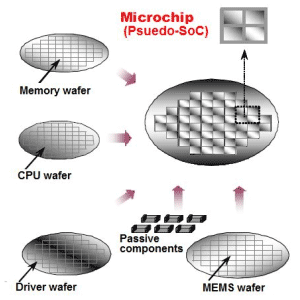
[... more]
Billed as a tonic for the Japanese economy, Abenomics certainly seems to be good for the country's automakers, judging by the way they are expanding capital investment. Toyota, the biggest contender in Japan's automotive domain, plans to invest 920 billion yen (US$9.2 billion**) this fiscal year, Nissan has earmarked 570 billion yen, and Honda intends to spend 700 billion yen. Compared to these sums, Panasonic, one of the leaders of Japan's electronics industry, plans a modest 205 billion yen in capital investment for this fiscal year, 34% less than last year. Major players in Japan's automotive industry are far more bullish, planning to expand capital investment 20% and R&D budgets 25% on average.
[... more]
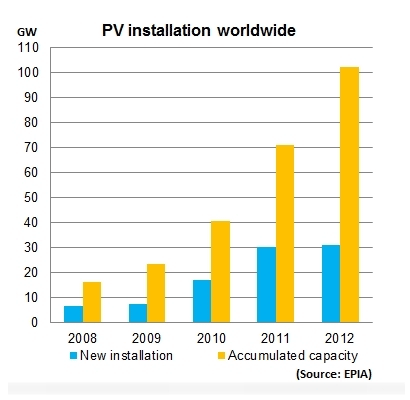
[... more]
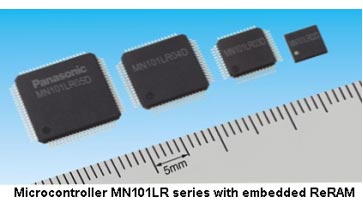
[... more]
Lenovo and Sharp have jointly developed smart TVs that connect to the Internet and can deliver streaming content.
[... more]
Under a blazing sun, I am walking the streets of Kurume, a city in northern Kyushu. Traditionally famous for cotton fabrics known as Kurume kasuri, contemporary Kurume is well connected with the rest of Japan as the Kyushu Shinkansen stops here. In front of the station, my eyes are drawn to a bizarre monument in the form of a gigantic tire. It was erected by tire maker Bridgestone, founded in Kurume in 1931*. And here is the karakuri (automaton) clock monument honoring Kurume's native son, Hisashige Tanaka, founder of Toshiba. Wiping the sweat from my brow as I pass these monuments, I recall that Kurume is also the hometown of Seiko Matsuda, Japan's eternal pop idol.
[... more]
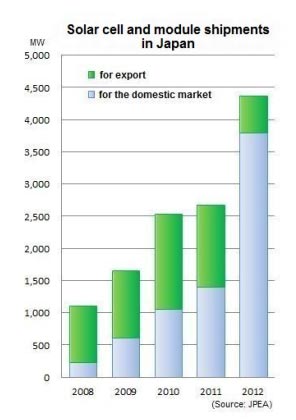
[... more]
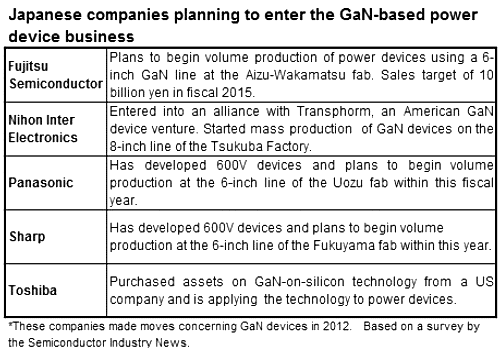
[... more]
The shale gas revolution is a game-changer with profound implications for the global economy, politics and society. The sudden advent of shale gas as the next-generation fuel of choice has already drastically lowered the cost of energy to around 6 yen (6 US cents*) per kW/h. So stop worrying about running out of fossil fuels. Instead, welcome shale gas—the hero of a brave new world awash with energy. By some estimates, our planet has enough shale gas and conventional natural gas for the next 400 years at current rates of consumption. Moreover, not only is shale gas not burdened by the risks associated with nuclear power plants, but CO2 emissions are much lower than for other fossil fuels.
[... more]
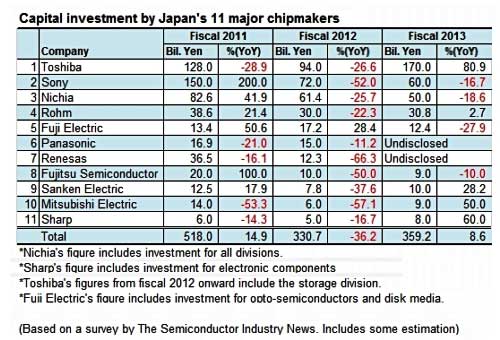
[... more]
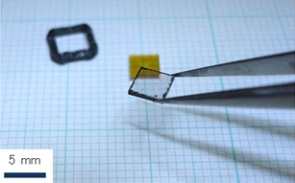
[... more]
Towering head and shoulders about the rest of the players, TMSC is the world's preeminent semiconductor foundry, basking in the prosperity that comes with commanding an overwhelming share of the planet's foundry market. Meanwhile, the chip industry is clearly advancing into a fabless or fab-lite future, a megatrend that works to TSMC's advantage.
[... more]
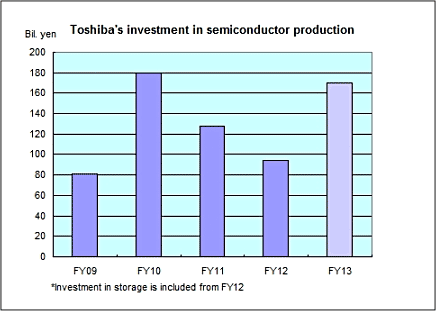
[... more]
Tokyo Electron (TEL) plans to complete the development of ink-jet OLED production equipment for 8G glass substrates by the end of this year, with a view to meeting anticipated demand as the OLED TV market is expected to take off around 2015.
[... more]
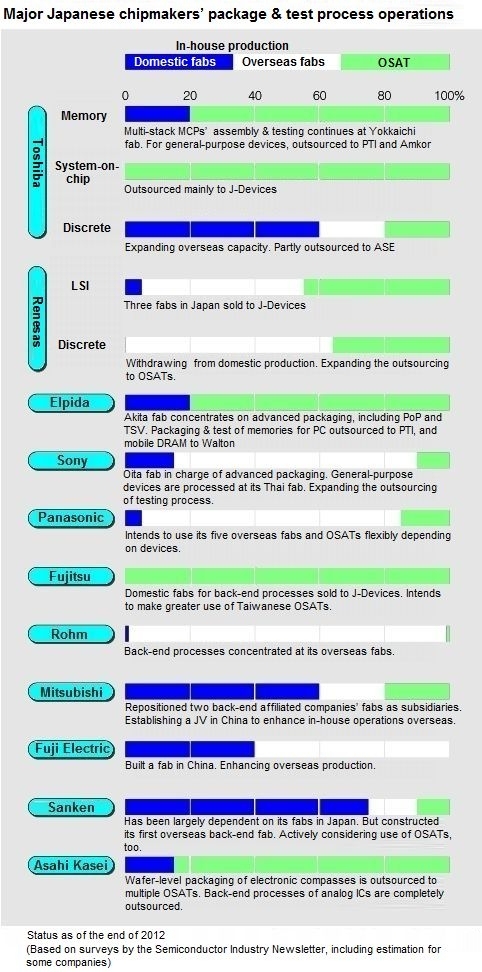
[... more]
"The Abe administration will be desperately pursuing policies to unleash economic growth in the run-up to the Upper House election this summer. The government is already active—for example, beating the drum for Japanese innovation, promoting the advance of Japan's medical equipment industry into the global marketplace, and encouraging Japanese women to participate fully in the world of work. If the upward trend continues, the Nikkei index may well reach the 18,000-yen level and the yen could drop as low as 120 to the dollar!"
[... more]
[... more]
The DRAM market is pumped up again thanks to brisk demand for the memories that go into smartphones and tablets. This is all the more welcome because a stagnant world economy put a brake on capital investment in the DRAM sector last year, playing havoc with the businesses of manufacturers of semiconductor equipment and materials. Recently, with demand for smartphones and tablets on a roll, DRAM makers are convinced that the market has changed for the better.
[... more]
[... more]
[... more]
Blog: Sensor technology the new frontier: says keynote speaker at Silicon Sea Belt Summit in Fukuoka
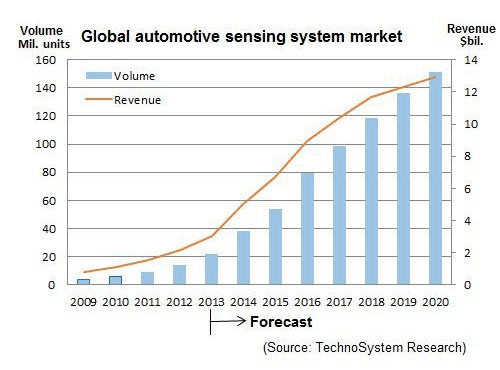
"Which new technology is going to create the next big new market, pushing back the frontier and opening up new territory? We have seen the IT industry's growth rate slow to a crawl, virtually leveling off. The history of our industry shows that unless something capable of leading us into a new era emerges, growth comes to a standstill," said Chong-Min Kyung, director of the Korea Advanced Institute of Science and Technology (KAIST), in a keynote speech at Silicon Sea Belt Summit 2013 in Fukuoka last month.
[... more]
Toshiba Corp. thinks its semiconductor business results for the fourth quarter (January-March) will likely be below the level of those for the third quarter (October-December), as orders from major customers have decreased. The cutback in NAND production in the fourth quarter will exceed the 10% cutback that Toshiba made in the third quarter.
[... more]
The woes of the Boeing 787 have had repercussions worldwide, not least in Japan. The scale of the business at stake is massive: as much as $160 billion if, as planned, Boeing manages to build 800 jetliners at about $200 million a pop. But this high-flying business plan is threatened by safety concerns that could ground the Boeing 787. This would deal a heavy blow to the Japanese manufacturers supplying state-of-the-art components and materials, such as carbon fiber and lithium-ion batteries, to Boeing.
[... more]
While curbing capital investment is the norm among Japan's semiconductor manufacturers, Hamamatsu Photonics K.K. is bucking the trend by earmarking 13.5 billion yen (US$159 million*) for investment in new production capacity this fiscal year**, up 56% from the previous year. The company plans to invest 38.5 billion yen over the next three years, including this fiscal year's 13.5 billion yen.
[... more]
Warning: Invalid argument supplied for foreach() in /home2/semicon/hosting/spiwww/include/Banner.php on line 78
Warning: array_multisort(): Argument #1 is expected to be an array or a sort flag in /home2/semicon/hosting/spiwww/include/Banner.php on line 81
Warning: Invalid argument supplied for foreach() in /home2/semicon/hosting/spiwww/include/Banner.php on line 85