
EmergingTech from Japan

Main News

|
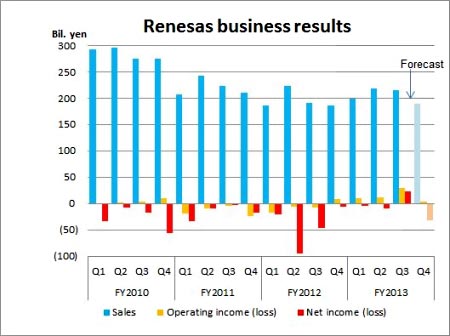
2011 was a terrible year for many Japanese companies. The megaquake in March was followed by flooding later in the year in Thailand where many Japanese companies have factories. These disasters occurred against the backdrop of a sluggish economy in Europe and less rapid growth in China. Renesas Electronics Corp. was one of the companies worst hit by the earthquake and its revenue for fiscal 2011 ended in March fell to 883 billion yen (US$11 billion*), a 22% drop from last year's 1,138 billion yen. About 55 billion yen of the decline in sales was directly attributable to the quake, according to Yasushi Akao, president of Renesas.
|
PayPal and Softbank announced today that they will establish a joint-venture company, provisionally called PayPal Japan, to build a digital payments business by introducing the PayPal Here service in Japan. By promoting the PayPal Here service in Japan's retail sector, Softbank aims to leapfrog the Osaifu Keitai (electronic wallet) service widely used in the country. The iPhone's lack of an Osaifu Keitai function is often cited as a drawback in the Japanese market.
|
Bankrupt Elpida Memory, Inc., Japan's sole DRAM manufacturer, on Sunday selected Micron Technology, Inc., from two bidders in the second round that closed last Friday, and will give Micron preferential negotiation rights to purchase Elpida and draw up a rehabilitation plan together with Yukio Sakamoto, Elpida's CEO and president who is the bankruptcy administrator. None of the parties mentioned has announced or confirmed anything, and the media reports cited no sources.
|
Kyoto-based Kyosemi Corp., which is developing spherical photovoltaic cell technology and marketing related products, will boost its microball solar cell business with investment totaling 600 million yen (US$7.5 million*) from the Innovation Network Corporation of Japan (INCJ**) and Hitachi High-Technologies Corp.
|
"Consumers are strongly demanding high resolution and low power consumption for mobile devices," said Shigemitstu Mizushima, Sharp's executive vice president and chief technology officer, in his keynote speech at FineTech Japan earlier this month. Sharp expects the resolution will soon advance from the current 300 ppi for smartphones to 500 ppi and that even the larger panels for tablets will feature over 400 ppi soon, according to Mizushima.
|
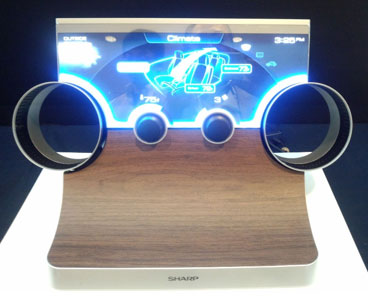
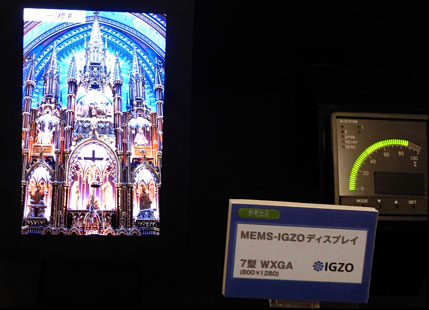
Sharp Corp. announced that it started fabrication of IGZO panels last month at its Kameyama No. 2 fab and is ramping up the production volume this month, about three months behind the original schedule. The company showed three prototypes—32-inch, 10-inch and 7-inch panels—at a press briefing held today in Osaka.
|
Digital Publishing Initiatives Japan (DPIJ) (trade name: Pubridge) launched on Monday aims to build eBook publishing infrastructure in Japan. The Innovation Network Corporation of Japan (INCJ*), a 90% government-owned fund will invest 15 billion yen (US$188 million**) in the company. Japan's publishers have been slow to embrace digital publishing, but rumors that Amazon will launch a Kindle for the Japanese market has got their attention and stirred them into action.
|
Through the alliance with Hon Hai Group, also known as Foxconn, Sharp Corp. has moved away from its long-standing vertically integrated business model to embrace a more flexible style in a bid to gain global competitiveness. Foxconn's investment and panel procurement will be a quick remedy for Sharp's business, which is expected to report a record loss of 290 billion yen (US$3.6 billion*) this fiscal year, largely attributable to the LCD business, but at the same time, Foxconn's business could undermine Sharp's advantage in large panels. In May, Sharp intends to announce a new strategy designed to achieve synergy through the alliance with the Taiwanese group.
|
Eager customers around the world can finally get their hands on the new iPad, long nicknamed the iPad 3 or the iPad HD. Its principal new feature is a twice-higher resolution retina display, which, rumor has it is Sharp's IGZO (indium-gallium-zinc oxide) panel. All will be revealed soon by tear-down investigations, but IGZO panels have already attracted attention among panel manufacturers and will soon appear in other manufacturers' products. The Japan Science and Technology Agency (JST), which spearheaded the initial stage of IGZO development, has been active in licensing its pooled patents covering the technology, starting with Samsung last July.
|
Yukio Edano, Minister of Economy, Trade and Industry, who has been in the eye of the storm, as well as in the public eye, ever since the earthquake, tsunami and nuclear disaster dealt Japan a triple whammy last March, first as Chief Cabinet Secretary and since September as the Minister of Economy, Trade and Industry (METI), talked to the press last week, mainly about energy issues in the wake of the disaster.
|
Elpida Memory, Inc. yesterday filed for protection under the bankruptcy law with liabilities of 448 billion yen (US$5.6 billion*), making it the largest corporate failure ever in Japan's manufacturing sector. Ironically, Elpida had been viewed as one of the most successful cases among attempts to restructure and consolidate businesses by merging multiple companies' operations. The bankruptcy may overshadow other attempts to reshape and revitalize Japan's electronics industry.
|
Hitachi, Ltd. has demonstrated a small humanoid robot, Emiew2, endowed with network-linked image recognition employing a database of over 100 million images gathered from the Internet.
|
Japanese manufacturers' shipments of digital still cameras this year will recover from the impact of last year's disasters, with high-end interchangeable cameras accounting for all of the growth, according to the Camera & Imaging Products Association (CIPA)
|
Panasonic Corp. announced last week that it expects to record a net loss of 780 billion yen for this fiscal year ending March, the biggest in its history. Between now and its centenary in 2018, Panasonic is endeavoring to transform itself from a consumer products manufacturer into a "green innovation company," its shorthand for an enterprise focused on offering eco-friendly solutions. With this in mind, Panasonic earmarked 764 billion yen (US$9.9 billion*) for restructuring costs for this fiscal year, including 290 billion yen for the impairment of Sanyo's goodwill. "The merger of Sanyo enabled us to formulate a clear vision of the green innovation company we intend to be by 2018" said Fumio Ohtsubo, president of Panasonic.
|
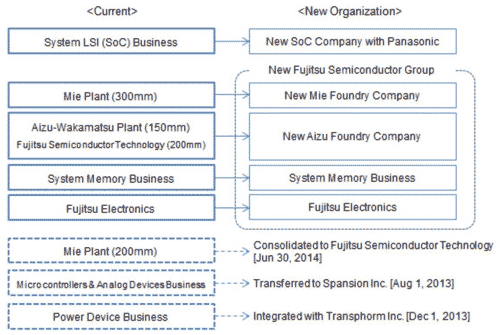
Fujitsu Ltd., Panasonic Corp. and Renesas Electronics Corp. will merge their system-on-chip LSI operations into a new fabless company and Globalfoundries will purchase Fujitsu's and Renesas' 300mm wafer fabs for a new foundry that it will establish in Japan. Innovation Network Corporation of Japan (INCJ) will invest in these two new companies. The four companies are expected to conclude a basic agreement by March. Globalfoundries also intends to purchase Elpida Memory's Hiroshima fab and turn the memory fab into part of the new SoC foundry. This dramatic story reported this morning by Nikkei, a business daily, has been picked up by media around the world.
|
The New Energy and Industrial Technology Development Organization, Japan's largest R&D management organization under the jurisdiction of the Ministry of Economy, Trade and Industry (METI), is now devoting a third of its annual budget of about 150 billion yen (US$1.9 billion*) to projects executed outside Japan.
|
"I wonder whether an alliance with a flash chipmaker would be profitable. Please give us one more month before we make a decision," said Yukio Sakamoto, president and CEO of Elpida Memory, Inc. at the announcement of the company's business results for the third quarter of fiscal 2011 ending March.
|
Sharp Corp. expects the record-worst business results for this fiscal year mainly because of LCD panel and LCD TV business. The company intends to prepare IGZO panel production at its flagship 10th generation plant in Sakai expecting that demand for IGZO will expand to not only smartphones but tablets and monitors and note PCs.
|
Elpida Memory, Inc. has developed 64M ReRAM memory cells using 50nm process and verified operation. The company intends to offer 8Gbit samples using a 30nm process next year and to begin volume production in 2014.
|
Tokyo Electric Power Co. announced on Tuesday that it will raise the electricity rate about 17% for volume users from April 1, a move to compensate for the increased fuel cost necessary to generate electricity because its nuclear plants are out of operation. The backlash from industries is strong and some companies are seeking alternative electricity suppliers.
|
2011 was a ghastly year for Japan's electronics industry. As if the magnitude 9 earthquake in March, accompanied by the Fukushima Daiichi nuclear power plant disaster and consequent power shortages, wasn't enough, companies also had to contend with the Thai floods in October as well as the unprecedented appreciation of the yen not only against the dollar but also against the euro. In their customary New Year messages, chief executives advocated further globalization and renovation but were short on optimism.
|
Japanese manufacturers' electronics production in Japan will show no growth in 2012 but their overseas production will grow 2% compared with the previous year, accounting for 62% of Japanese manufacturers' total production, the Japan Electronics and Information Technology Industries Association (JEITA) forecast. In terms of total production in the worldwide market, Japan's presence is expected to continue shrinking, dipping below the 20% line to 19.2% this year, according to JEITA.
|
With the relentless decline in DRAM prices and the persisting strength of the yen making Elpida Memory's business an uphill struggle, various rumors including a merger with Toshiba or an alliance with Nanya Technology have been flying around Elpida since just before Christmas.
|
NTT Docomo, Inc. announced today it has reached a basic agreement with five companies—Fujitsu Ltd., Fujitsu Semiconductor Ltd., NEC Corp., Panasonic Mobile Communications Co., Ltd. and Samsung Electronics Co., Ltd.—to establish a fabless joint-venture company by the end of March 2012 to develop and sell semiconductors for mobile devices.
|
The Ministry of Economy, Trade and Industry (METI) has decided to recommend Echonet-Lite as the standard interface for connecting electric appliances and electronic equipment in the home to a home energy management system (HEMS). The Echonet Consortium, which defined the specification last June, has opened it to the public today. The English version will follow in the future.
|
Hitachi, Panasonic, Sharp and many other Japanese electronics/electric companies are mulling diversification into smart energy management, but Toshiba Corp. is among the most ambitious. Toshiba has announced a smart community-related business strategy that calls for sales to be more than doubled by leveraging the company's existing social infrastructure and ICT technologies already deployed worldwide.
|
The Digital Grid Consortium, a nonprofit founded this September in Tokyo, aims to control electricity as if it were information on the Internet. On Monday the consortium announced that three companies—NEC Corp., National Instruments Japan and Orix Corp.—will be involved in initiatives signaling the commencement of its operations.
|
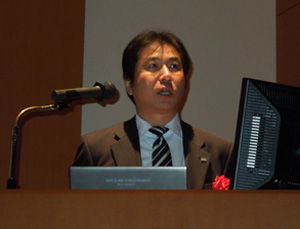
"Learning from experience, we are reinforcing our plants to make sure they can recover quickly even if a massive earthquake, more powerful than that of March 11, were to occur," Yasushi Akao, president of Renesas Electronics, said in the opening keynote speech at SemiconJapan 2011. As Renesas was one of the companies hit hardest by the earthquake, Akao knows how important collaboration and support from diverse industries are and expressed his appreciation in the speech. He explained the revised Renesas business continuity plan incorporating the lessons the company learned from the disaster, pitching to customers the company's enhanced ability to maintain supplies.
|
The global semiconductor market will achieve a new record of $302 billion in sales this year, surpassing $300 billion for the first time, but only the Japanese market will show a big drop, 15.8%, on a yen basis this year, according to the WSTS autumn forecast.
|
Just as Panasonic Corp. is about to fold Sanyo Electric and Panasonic Electric Works into its main unit on January 1, 2012, the Osaka-based giant is shaking up its loss-making flat-panel and semiconductor businesses. This signals the end of Panasonic's vertically integrated business model, a hallmark of the company until now. The company will outsource system-on-chip LSIs, long positioned as a differentiating technology, and almost halve production capacity of both PDP and LCD panels. On the other hand, Panasonic announced it is investing 45 billion yen (US$584 million*) to construct a new PV plant in Malaysia—PV being one of the company's priority fields going forward.
|
Innovation Network Corporation of Japan (INCJ*), Hitachi, Ltd., Sony Corp. and Toshiba Corp. today signed definitive agreements to integrate their small/mid-sized display businesses into a new company, Japan Display Inc., which will begin operation next spring. Panasonic's LCD plant will also be folded into Japan Display along with those of the three companies. The reorganization of Japan's flat panel industry, underpinned with an investment of 200 billion yen (US$2.6 billion), has taken off.
|
The Japan External Trade Organization (JETRO) and the Museum of Science and Industry (MSI), based in Chicago, have jointly announced Robot Revolution, a 4-year traveling exhibition on contemporary robotics. It is envisaged that the exhibition, which will tour the United States and Japan, will attract at least a million visitors. Eager to raise the profile of Japan's robotic technology in the United States, JETRO has joined forces with the MSI team to select Japanese robots, which will account for a third of the 50 or so robots exhibited.
|
Riken and Fujitsu Ltd. have jointly announced that the K computer surpassed the initial performance target of 10 petaflops (quadrillion floating-point operations per second) in October with its final configuration of 864 computer racks or 88,128 CPUs, attaining a computing efficiency ratio of 93.2%. Last June, the K computer's performance of 8.162 petaflops with about 80% of the final configuration was ranked No. 1 in the 37th TOP500 list. Capitalizing on its position at the head of the TOP500 list, Fujitsu has started aggressively marketing supercomputer systems based on technology developed for the K computer.
|
Elpida Memory, Inc., reporting second-quarter sales down more than half year on year amid plunging DRAM prices and a soaring yen, is in emergency mode—cutting production 25%, shifting production to Taiwan, and asking customers for financial support—but expresses confidence that DRAM prices will rise soon.
|
Sharp Corp. has achieved the world's highest solar cell conversion efficiency, 36.9%, using a three-layer compound solar cell in the Innovative Solar Cells project promoted by NEDO—the New Energy and Industrial Technology Development Organization, which targets 35% efficiency in 2014 and 40% in 2025.
|
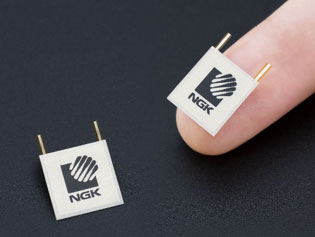
The NAS battery, the only practical battery system with megawatt-class capacity operating at present, is facing a blinking red light. NGK Insulators, Ltd., the sole manufacturer of NAS batteries, has requested its customers to stop using NAS battery systems for the time being and is suspending sales of these systems until the cause of a fire that occurred in September is identified and measures to prevent recurrence are established.
|
Flooding in Thailand has already submerged seven industrial parks, forcing companies to stop operations and evacuate. The ratio of Japanese companies at these industrial parks is high: of the 725 companies with facilities at the parks, 447, or more than 60%, are Japanese, according to the Japan External Trade Organization (JETRO). A further seven industrial parks are threatened and Sunday saw floodwaters encroaching on Bangkok. The impact on supply chains may ultimately exceed that of the Great East Japan Earthquake of March 11, warned a senior executive of an inundated Japanese company, as the waters have yet to recede and it is anyone's guess when restoration work will restart.
|
Along with the reduction of TV production reported last week, Panasonic Corp. plans to shrink its semiconductor business by shedding about 1,000 employees and outsourcing chip fabrication, Nikkei, a business daily, reported.
|
Panasonic Corp. has decided to shrink its TV business by ceasing operations at the Amagasaki No. 3 fab, its most advanced PDP plant, and is considering the sale of its Mobara fab for LCD panel production, the Yomiuri Shimbun, a daily newspaper, reported this morning.
|
Flooding in Thailand has hurt manufacturing, including plants of Japanese carmakers and electronics companies, which have been forced to halt operations. Plenty of big names such as Toyota, Nissan, Honda, Sony, Canon and Nikon have stopped manufacturing at their factories in drenched industrial parks. On top of the heavy damage already caused, the supply chain for HDD manufacturing is threatened.
|
Apple Inc., in a change of policy throughout the world, has opted for multiple carriers for the iPhone instead of sole carriers, but the exception is Japan, where Softbank is still the sole carrier for the iPhone. So a report last Thursday that KDDI Corp. would become the second carrier for the iPhone was big news in Japan. If it's true, Japan's mobile phone market would change drastically. Today, KDDI held a scheduled event to unveil a new product line-up for the coming year-end sales season. At the announcement, Takashi Tanaka, president of KDDI, repeated "no comment" when asked for clarification.
|
"Our ultimate goal is to develop transparent resin that conducts electricity. Such resin may be able to replace ITO, which uses rare materials and is expensive," said Hiroyuki Muto, associate professor of the Department of Electrical and Electronic Information Engineering, Toyohashi University of Technology, whose team developed a production method that allocates carbon nanotubes efficiently at particle boundaries to make the material electrically conductive.
|
Japan's feed-in tariff bill was passed on Aug. 26 and will come into effect on July 1, 2012. As FIT schemes have spurred the spread of renewable energy in over 80 countries worldwide, with Germany being one notable example, the adoption of renewable energy, especially mega-solar power generation, is expected to accelerate in Japan, too, stated Mikio Katayama, president of Sharp, who is acting as chairman of the Japan Photovoltaic Energy Association.
|
A team at the R&D Partnership for Future Power Electronics Technology (FUPET) has developed an all-SiC-device-based three-phase inverter with a 0.5-liter volume, which was verified to achieve an output power density of 30kWh/l. "We believe this is the world's highest output power density for a small-volume inverter," said Satoshi Tanimoto, chief researcher at FUPET's R&D Center.
|
The long-rumored merger of small/mid-size LCD operations in Japan is culminating in the establishment of a new company, tentatively named Japan Display K.K., created by merging the LCD operations of Hitachi, Sony and Toshiba with a helping hand in the form of 200 billion yen (US$2.5 billion*) in funding for the new company from Innovation Network Corp. of Japan (INCJ)**, an investment vehicle predominantly owned by the government.
|
As part of the streamlining to eradicate redundant businesses following Sanyo's absorption into the Panasonic Group, Sanyo Electric Co., Ltd. has agreed with Haier Group to transfer its washing machine and home-use refrigerator businesses to the Chinese company.
|
10 leading companies drawn from several industry sectors in Japan have formed the HEMS (Home Energy Management System) Alliance to prepare a multivendor device environment for smarthouses in Japan by 2014.
|
"The spot price of 2Gbit DDR3 started dropping sharply in April and reached $1.09 today. And since the mega-quake, the DRAM price has halved. We didn't expect things to get this tough," said Yoshitaka Kinoshita, COO of Elpida Memory, Inc.
|
Renesas Electronics Corp., hit hard by the Great East Japan Earthquake and aftershocks, has reported damage—including fixed costs during suspension of operations, disposal of damaged chips and repair costs—amounting to 11.9 billion yen (US$148.2 million) and is accelerating deployment of a multi-fab system to secure device supply capabilities for itself and customers in the event of disaster.
|
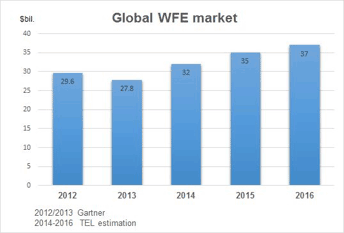
Fearing the semiconductor market has entered a downward spiral, Tokyo Electron Ltd. has drastically revised its business forecast for this fiscal year, cutting the beginning-of-the-year sales forecast by 12% to 640 billion yen (US$8 billion*), which is 5% lower than the result for the previous fiscal year. The figures were fixed after Semicon West through hearings with customers' executives, revealed Tetsuo Tsuneishi, TEL's vice chairman.
|
As part of the streamlining to eradicate redundant businesses following Sanyo's absorption into the Panasonic Group, Sanyo Electric Co., Ltd. has agreed with Haier Group to transfer its washing machine and home-use refrigerator businesses to the Chinese company.
|
The New Energy and Industrial Technology Development Organization (NEDO) has posted service robot software modules (robotic technology components) on the OpenRTM-aist site. The modules are some of the fruits of NEDO's five-year Next Generation Robot Software Development Project, scheduled for completion next March.
|
The Committee of High-purity Silicon, a wafer industry organization consisting of major wafer manufacturers located in Japan, is sticking to the forecast of this year's single-crystal wafer production in Japan issued last February, before the Great East Japan Earthquake, unchanged at 9,296 tons, a 7% increase from 8,688 tons for the previous year, saying that the impact of the quake was limited and short-term for wafer production.
|
Toshiba Corp. and SanDisk Corp. have started operation of a new 300mm NAND fab using 24nm process technology in Yokkaichi, Mie Prefecture. Toshiba is migrating to the19nm process this month at the existing Fab 4, and the new fab will also add the 19nm process by the end of this year to gain an edge over competitors in scaling.
|
10 leading companies drawn from several industry sectors in Japan have formed the HEMS (Home Energy Management System) Alliance to prepare a multivendor device environment for smarthouses in Japan by 2014.
|
The Semiconductor Equipment Association of Japan (SEAJ) has announced its three-year forecast covering the semiconductor equipment market. SEAJ issues the forecast every six months. The latest forecast for the Japanese market for fiscal 2011, the 12 months to March 2012, is 29% greater than the forecast announced last January—a major upward revision reflecting Toshiba's heavy investment in NAND fabrication.
|
Lenovo and NEC Corp. launched a PC JV in Japan on July 1, which will be the largest PC contender in Japan, accounting for about a quarter of the country's PC market.
|
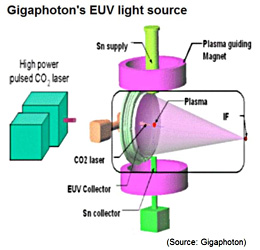
The EUVL Infrastructure Development Center, Inc. (EIDEC), an EUV lithography R&D company, established by 11 of Japan's semiconductor-related companies last January, held a kick-off symposium on June 17 and has started operation with Intel, Samsung Electronics, TSMC and Hynix Semiconductor participating as development partners.
|
Japan's K Computer, being developed by Riken and Fujitsu Ltd., took first place with its halfway configuration on the 37th TOP500 list announced on Monday at the 26th International Supercomputing Conference (ISC'11) in Hamburg, Germany. "Without collaboration with several companies in earthquake-stricken Tohoku that did their utmost to recover, we could not have attained the top position," stressed Michiyoshi Mazuka, chairman and representative director of Fujitsu.
|
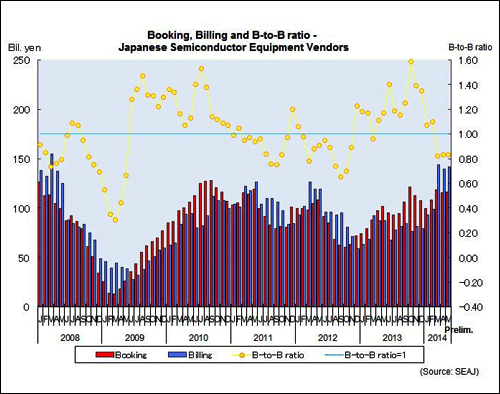
Both billing and booking of Japan-based manufacturers of semiconductor equipment has been hovering just below 1 for three months and the result for May was 0.94, according to the Semiconductor Equipment Association of Japan (SEAJ).
|
Ubiquitous Corp., a ten-year-old Tokyo-based venture, has developed a prototype smart tap named iRemoTap, and intends to promote it together with an energy management platform to visualize power consumption.
|
The possibility of power shortages in Japan this summer is prompting Toshiba Corp. to introduce a 19-inch "peak-shift" TV equipped with a lithium-ion battery pack in early July, which can switch from AC power supply to battery power at the push of a button and run on battery power for three hours, or for four hours in power-saving mode. With this TV, the idea is to stop consuming electricity from the grid during periods of peak power demand and charge the battery during off-peak periods.
|
Sharp Corp. is giving up production of loss-making LCD panels for volume-zone TVs and will concentrate on high-resolution small/mid-size LCDs that tap into rapidly growing demand for smartphones and tablets and on super-large panels for 60- to 70-inch TVs, digital signage and other applications.
|
Renesas announced it will regain pre-quake supply capacity—factoring in supply from its group fabs and foundries—by the end of September, one month ahead of the plan announced on May 18. And once the pre-quake capacity is attained in September, in the second half Renesas intends to raise capacity above the pre-quake level to satisfy greater demand from customers wishing to compensate for lower production in the first half when Renesas products were in short supply, said Yasushi Akao, president of Renesas.
|
Hitachi, Ltd. has announced the forecast of its business results for this fiscal year: 9.5 trillion yen (US$118.8 billion*) in sales, up 2% from the previous year, operating profit of 400 billion yen, up 11%, and net profit of 280 billion yen, up 8%.
|
Sony Corp. and Toshiba Corp. are negotiating to merge their small and mid-size LCD operations and establish a new company, which will be supported by government funds, with a view forging ahead with OLED panels, media reported.
|
Japan and the EU have launched a joint R&D project, with about 11.5 million euros in funding, to develop concentrator PV cell and module technology targeting the world's highest conversion efficiency of 45% for cells and 35% for modules.
|
Renesas Electronics Corp.'s Naka fab, which has been out of operation since the Great East Japan Earthquake in March, started up its 200mm line for microcontrollers on June 1 as planned. The Naka fab manufactures about 20% of Renesas' microcontrollers and 25% of those for automotive-use made by the company.

Monthly Archives

SSL Global Sign